
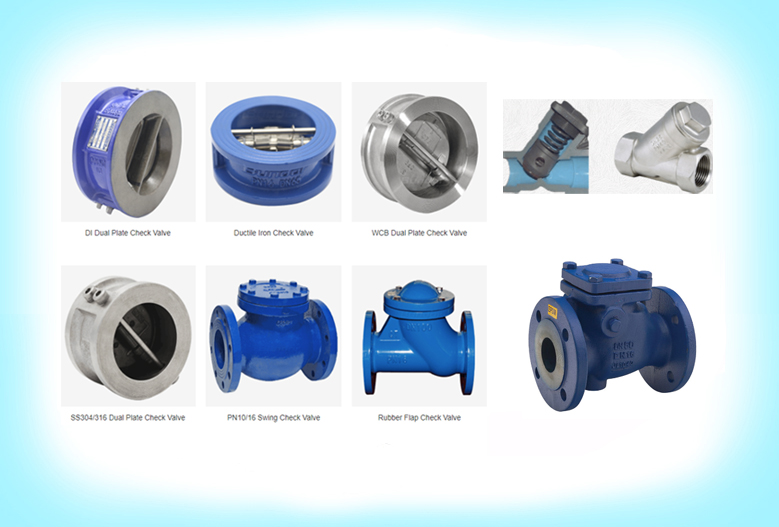
Check valves are automatic non-return valves that permit forward flow and restrict backflow in industrial piping systems. The body forms a passage between the inlet and outlet ports and houses a closing element and seat. During forward flow, the pressure differential moves the element away from the seat. When flow decreases or reverses, gravity, spring force, fluid pressure or a combination returns the element towards the seat. The speed and effectiveness of closure vary with the valve design and operating conditions.
For pump discharge lines, consider the fluid type and operating conditions when choosing a check valve. A swing check valve uses a hinged disc, while a lift check valve has a disc that rises along a guide. A dual plate check valve uses two plates that open with the flow and many models have a wafer-pattern body. A ball check valve uses a ball to control reverse flow. A spring-loaded check valve uses spring force to assist closure, with cracking pressure varying by model. Before ordering, check installation orientation and flow direction. Specify pressure class, operating temperature, fluid viscosity, suspended solids, corrosion resistance, end connections and body material such as stainless steel or cast iron. Consider pressure surges, water hammer risks and access for inspection and maintenance. Check whether the valve design matches the actual fluid, pressure, temperature and installation conditions.
Application Overview
A small automobile component manufacturer in Pune approached Priti Enterprises after fluid flowed back through the pump discharge line of its hydraulic press between cycles. The company supplied ½-inch SS316 spring-loaded check valves with BSP threaded ends, a 10 PSIG cracking pressure and Viton seals. The valves were fitted downstream of each pump. The installation stopped the backflow and maintained pressure in the press line between cycles without further adjustment.
Advantages
- Automatic Action: A check valve opens when forward flow generates enough pressure to move the closing element and it closes when flow stops or reverses. Normal operation needs no manual intervention.
- Backflow Control: Industrial check valves restrict reverse flow in pump discharge lines and other piping systems. Limiting backflow reduces the risk of damage to pumps and connected equipment.
- Design Options: Swing, lift, dual plate, ball and spring-loaded check valves cover different flow conditions and piping layouts. A wafer-pattern body gives a compact installation option between flanges.
- Material Options: Stainless steel and cast iron check valves come in a range of sizes, pressure ratings and end connections for different industrial piping systems.
- Right Selection: Cracking pressure, pressure drop and closing characteristics differ between designs. The right valve choice depends on the fluid, operating conditions and installation requirements.
Technical Specifications
- Product Types: Brass check valves, stainless steel check valves, relief valves and non-return valves.
- Materials: SS304/SS316, brass, C.I., C.S./WCB, Inconel, duplex, Super Duplex, investment casting.
- Working Pressure: Up to 10000 PSIG.
- Temperature Rating: -20°C to 350°C.
- Cracking Pressure: 1 Bar to 10 Bar.
- End Connections: Male and female BSP, NPT and Flanged threads.
- Size Range: 1/8" to 16".
- Dimensions: For reference only. Other sizes and types are available on request.
Application Industries
- Oil and Gas Industry
- Petroleum Refining Industry
- Chemical Processing Industry
- Fertiliser Industry
- Power Generation Industry
- Automobile Industry
- Nuclear and Defence Industry
- Pharmaceutical Industry
- Food and Beverage Industry
- Water and Wastewater Treatment Industry
Frequently Asked Questions (FAQs)
Q1. What is a check valve?
A1. A check valve, also called a non-return valve, is an automatic valve that permits forward flow and restricts reverse flow.
Q2. What is cracking pressure?
A2. Cracking pressure is the pressure differential required to begin opening a check valve. Priti Enterprises offers 1 Bar to 10 Bar.
Q3. What causes water hammer?
A3. Water hammer occurs when a sudden change in fluid velocity creates a pressure surge. Spring-loaded check valves can reduce valve slam when correctly selected.
Q4. What is a wafer type check valve?
A4. A wafer type check valve fits between two pipe flanges with a compact body design.
Q5. Which materials do your check valves come in?
A5. Options include SS316 stainless steel, brass, C.I., C.S./WCB, Inconel and duplex stainless steel, with investment-cast options.
Q6. What are the working pressure and temperature ratings?
A6. Working pressure is available up to 10,000 PSI; -20°C to 350°C.
Q7. Which sizes and end connections do you supply?
A7. Sizes range from 1/8" to 16", with male or female BSP or NPT threaded connections. Other sizes are available on request.
Q8. Does Priti Enterprises export check valves from India?
A8. Yes, export markets include Gulf countries, South Africa and other African countries, Finland, Israel, France and Italy.
Contact Us
Control backflow, maintain pressure, protect pumps, presses and pipelines. Priti Enterprises manufactures and exports check valves in S.S., Brass, M.S., C.I., C.S. and Iron Casting, with registered and sales offices in Mumbai, Maharashtra, India. Our export markets include Gulf countries, South Africa and other African countries, Finland, Israel, France and Italy.
Find the right check valve for your system.
Email: pritienterprises2012@gmail.com or pritiindustries2018@gmail.com.
Visit www.tubeandpipefittings.com to request a quote today.